
Table of Contents
- What Is Automotive Gear and Why It Matters
- 4WD Accessories for Off-Road and Adventure Driving
- Automotive Tools for Vehicle Maintenance and Repair
- Car Care Products to Protect and Enhance Your Vehicle
- Car Emergency Kit Essentials Every Driver Should Carry
- Choosing the Right Automotive Gear for Your Needs
- Frequently Asked Questions
Last Updated: October 12, 2026
What Is Automotive Gear and Why It Matters
Automotive gear refers to the equipment, accessories, and tools that enhance your vehicle’s functionality, safety, and appearance. At DriveGear, automotive gear spans recovery equipment and lifting tools to car care products and emergency kits.
The term covers mechanical components like gearboxes and transmission parts, plus practical accessories, safety equipment, maintenance tools, and protective products that keep your vehicle running smoothly and looking its best.
Why does automotive gear matter? Your vehicle is one of your most significant investments. Proper gear protects that investment and ensures you’re prepared for whatever the road throws at you.
4WD Accessories for Off-Road and Adventure Driving
Off-road driving demands specialised automotive gear built for harsh conditions and unpredictable terrain. Four-wheel-drive accessories are functional necessities, not aesthetic upgrades.
Recovery gear sits at the top of this category. Winches, snatch blocks, and recovery straps extract your vehicle from difficult situations, while traction boards improve grip on sand and mud.
Suspension upgrades are another critical area. Lift kits raise your vehicle for better ground clearance, and upgraded shock absorbers handle rough terrain more effectively than factory components.
Lighting accessories extend visibility in low-light conditions.
Underbody protection matters too.
When selecting 4WD accessories, prioritise compatibility with your specific vehicle make and model. Aftermarket parts that don’t fit properly can compromise safety and performance. Always verify mounting points and electrical requirements before purchasing.
Automotive Tools for Vehicle Maintenance and Repair
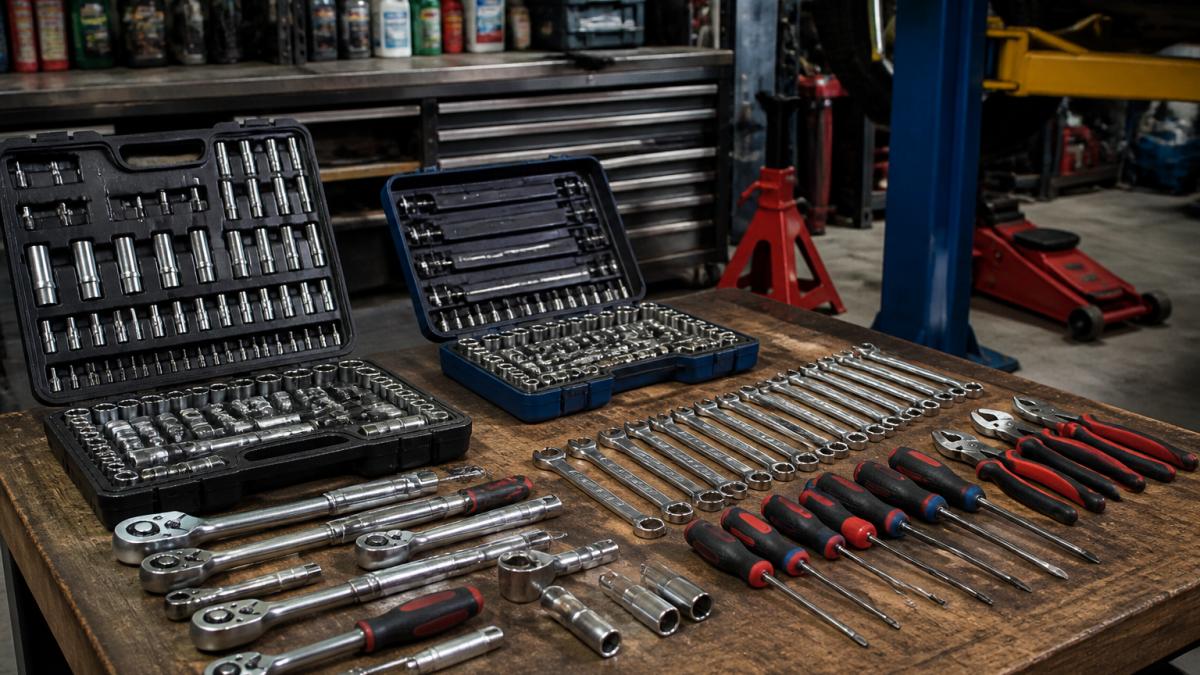
Proper automotive tools let you handle routine servicing and minor repairs at home rather than booking a workshop visit for every job. The right kit also makes the work safer, because most serious injuries in home maintenance come from improvised support or the wrong tool for the load.
Lifting and supporting the vehicle
Jack stands and hydraulic jacks are non-negotiable safety equipment. A trolley jack is rated by capacity, and a common rule of thumb is to choose one rated at least 1.5 times the heaviest corner of the vehicle you intend to lift.
Match the jack to the vehicle. Low-profile trolley jacks suit lowered cars, while high-lift and long-reach jacks suit four-wheel drives with raised suspension. Always chock the wheels that stay on the ground, work on a hard level surface, and lower the vehicle onto the stands before removing the jack.
Never attempt to work under a vehicle supported only by a jack. Hydraulic jacks can fail unexpectedly. Always use jack stands as your primary support, and place them under manufacturer-approved lift points. This simple precaution prevents serious injury or death.
Hand tools and torque control
Socket sets, spanners, and screwdrivers form your basic toolkit. Metric and imperial sizes cover most vehicles, and six-point sockets grip worn or tight bolts more securely than twelve-point versions. A breaker bar gives leverage on stubborn fasteners without damaging a ratchet.
A torque wrench ensures bolts are tightened to manufacturer specifications, preventing over-tightening that can strip threads or stretch critical fasteners. Store torque wrenches at their lowest setting and have them checked periodically if you rely on them for cylinder heads, suspension or wheel nuts.
Engine hoists and stands
Engine hoists and engine stands simplify major repairs. An engine hoist safely removes engines for rebuilding or replacement, with folding 1-tonne and 2-tonne units covering most passenger and light commercial engines. Engine stands hold the engine securely while you work on internal components, and a rotating head makes it far easier to access sumps, timing covers and cylinder heads.
Diagnostics and measurement
Diagnostic equipment has become increasingly important. OBD-II scanners read fault codes from your vehicle’s computer system, helping identify problems before they become serious. Basic code readers suit occasional use, while live-data scanners and bidirectional tools let you command components such as injectors and ABS pumps during testing.
Measurement tools round out the kit. Vernier calipers, micrometers and feeler gauges let you check wear against specifications, and a digital multimeter is essential for tracing electrical faults, among the most common causes of breakdowns.
Building a kit in stages
A sensible order of purchase is: jack and stands first, then a socket and spanner set, then a torque wrench, then diagnostics. Buy the best lifting and supporting equipment you can afford, because that is where the consequences of failure are most severe.
Before buying any lifting equipment, check the vehicle’s kerb weight and the manufacturer’s recommended jacking points in the owner’s manual. A jack that is rated highly enough but does not fit under the sill is useless, and lifting from the wrong point can bend body panels or damage the fuel and brake lines routed underneath.
Car Care Products to Protect and Enhance Your Vehicle
Your vehicle’s exterior and interior require regular care to maintain appearance and protect against environmental damage. Quality car care products make this straightforward.
Exterior protection begins with regular washing. Specialist car shampoos remove dirt without stripping protective wax layers.
Interior care products protect upholstery, leather, and dashboard materials.
Glass care products improve visibility and protect against water spots and mineral deposits. Specialist glass coatings make cleaning easier and improve water beading during rain.
Engine bay cleaning products remove built-up grime and grease, making maintenance easier and helping identify leaks or worn components early.
Car Emergency Kit Essentials Every Driver Should Carry
Every vehicle should carry emergency equipment to handle unexpected situations, transforming a stressful breakdown into a manageable problem.
Jumper leads or portable jump starters revive a flat battery without assistance.
Spare fuses, bulbs, and belts address common electrical and mechanical failures.
Spare coolant, engine oil, and brake fluid let you top up critical fluids during emergencies.
Jumper cables, tow ropes, and traction aids provide recovery options.
First aid kits address medical emergencies.
Torch and spare batteries illuminate dark areas during night breakdowns.
Spare keys stored separately prevent lockouts.
An emergency kit should be customised to your vehicle type and driving habits. Off-road adventurers need different equipment than urban commuters. Review your kit seasonally and replace used items immediately.
Choosing the Right Automotive Gear for Your Needs
Selecting appropriate automotive gear requires honest assessment of your driving patterns and vehicle type. Different drivers need different equipment, but the criteria for judging a product are largely the same across categories.
Start with fitment and compatibility
Compatibility is your primary consideration. Automotive gear must match your specific vehicle make, model, year and, in many cases, trim or engine variant. For mechanical parts such as gear sets, gearboxes and suspension components, fitment is defined by part numbers and interchange references, so cross-check the number rather than relying on a photo.
For accessories such as roof racks, bull bars, tow bars and light bars, check mounting points, wiring requirements and whether the product is rated for your vehicle’s gross vehicle mass. Incorrect fitment compromises safety and can make a vehicle unroadworthy.
Check load ratings and safety standards
Any product that carries, lifts or restrains a load should state a rating. Recovery straps and winch ropes are rated by breaking strength, and a common practice is to select a strap rated well above the vehicle’s kerb weight to allow for the dynamic loads of a snatch recovery.
Where a product is used on a public road, look for evidence it meets relevant vehicle standards and comes with fitting instructions. Electrical accessories should be rated for the current they draw, and wiring should be fused appropriately.
Match materials to the environment
Materials determine how gear performs over time. Stainless steel and powder-coated finishes resist corrosion better in coastal and humid conditions. Nylon webbing recovery gear stretches and stores energy, suiting snatch recoveries, while high-modulus polyethylene ropes are lighter and do not recoil the same way. For tools, chrome vanadium steel is common for sockets and spanners, while impact-rated sockets are required for rattle guns.
Weigh durability, maintenance and warranty against price
The cheapest option is rarely the best value once you account for ownership costs. A recovery strap that fails after two seasons, or a jack that leaks, costs more than a better-built alternative. Look at warranty length and coverage, whether spare parts such as seals and fittings are available, and how much routine maintenance the product needs.
For gearboxes and drivetrain components, value depends heavily on correct installation and regular fluid changes. A rebuilt or aftermarket unit may cost less upfront but can carry a shorter warranty than a genuine replacement.
Prioritise by driving profile
Daily commuters prioritise comfort and convenience. Interior organisation systems, phone mounts and seat covers enhance daily driving, car care products maintain appearance, and an emergency kit provides peace of mind.
Off-road adventurers need strong recovery equipment and protective gear. Winches, recovery straps and underbody protection are essential, and suspension upgrades and all-terrain tyres become non-negotiable investments.
Pet owners require specialised automotive gear focused on animal safety. Pet barriers prevent distractions, travel crates secure pets during emergency braking, and seat covers protect upholstery from damage.
Vehicle enthusiasts invest in premium detailing products and performance upgrades.
| Driving Profile | Priority Gear | Essential Tools | Car Care Focus |
|---|---|---|---|
| Daily Commuter | Emergency kit, interior organisation | Basic socket set, jumper leads | Regular washing, wax protection |
| Off-Road Adventurer | Recovery equipment, underbody protection | Jack stands, engine hoist | Undercarriage wash, protective coating |
| Pet Owner | Pet barriers, seat covers | First aid kit, traction aids | Stain-resistant products, odour control |
| Enthusiast | Suspension upgrades, aesthetic parts | Diagnostic scanner, torque wrench | Ceramic coating, detail spray |
Budget allocation
Budget allocation requires prioritisation. Safety equipment such as jack stands, recovery straps and emergency kits should never be compromised for cost, and aesthetic upgrades can wait. Spend first on anything that prevents injury or breakdown, second on anything that prevents expensive damage, and last on appearance.
At DriveGear, we’ve curated our collection to serve all these driving profiles. Our range includes automotive gear selected for durability, functionality and genuine value, with fast Australia-wide delivery. Whether you need recovery gear for your next adventure or car care products for routine maintenance, we stock the reliable equipment serious drivers depend on.
Frequently Asked Questions
What automotive gear should every driver keep in their car?
Every driver should carry a basic emergency kit including jump leads, a torch, spare fuses, a first-aid kit, and warning triangles. For those who perform their own maintenance, essential automotive gear includes a socket set, spanners, screwdrivers, and a jack with jack stands. Daily commuters benefit from interior organisers and protective seat covers, whilst adventure-focused drivers should add recovery equipment, traction aids, and spare fluids. Your specific needs depend on how often you maintain your vehicle yourself and the type of driving you do.
How do I choose automotive accessories for my vehicle?
Start by identifying your primary use: daily commuting, off-road driving, or long-distance touring. Check your vehicle’s specifications to ensure compatibility with any lifting equipment or drivetrain components. Consider quality and durability, products from trusted manufacturers often cost more upfront but last longer and perform better. Read customer reviews to understand real-world performance. Finally, prioritise safety-critical items like jack stands and emergency kits before aesthetic upgrades. DriveGear sources products from reliable manufacturers and provides detailed compatibility information to help you make informed choices.
What 4WD accessories are useful for off-road driving?
Essential 4WD accessories include recovery equipment like snatch straps and shackles, traction aids such as sand ladders or recovery boards, and protective gear including bull bars and skid plates. Storage solutions like roof racks and cargo organisers help secure gear safely during rough terrain. Suspension upgrades, all-terrain tyres, and winches improve off-road capability. Many off-road enthusiasts also invest in engine protection components and heavy-duty replacement parts designed for demanding conditions. Your choice depends on the terrain you frequent and your vehicle’s current setup.
How often should I replace automotive gear and maintenance products?
Replacement frequency varies by product type. Emergency kit items like first-aid supplies and fluids should be checked annually and replaced if expired or depleted. Workshop tools last many years with proper care, though consumables like cleaning brushes wear out faster. Car care products depend on usage, protective coatings may need reapplication every 6-12 months depending on climate and driving conditions. Wear items like jack pads and engine stand components should be inspected regularly for damage. Refer to manufacturer guidelines for specific products, and replace any gear showing signs of wear or damage to maintain safety and performance.
Choosing the right automotive gear means understanding your actual needs rather than buying everything you see. The best approach combines essential safety equipment with products that genuinely improve your driving experience. DriveGear’s curated selection focuses on quality and usability, helping you invest in gear that delivers real value. Shop now to upgrade your vehicle with equipment that enhances both performance and peace of mind.