
Table of Contents
- How Snatch Straps and Kinetic Ropes Work
- Key Differences: Stretch, Load Capacity, and Durability
- Snatch Strap Safety: Procedures and Failure Risks
- Kinetic Rope Size Guide: Choosing the Right Diameter and Length
- Beach Recovery Gear: When Sand Changes Everything
- Soft Shackles for Recovery: Connection Hardware That Matters
- Best Use Cases: Vehicle Type and Recovery Scenario
- Inspection, Care, and When to Retire Your Gear
- Frequently Asked Questions
Last Updated: October 14, 2026
How Snatch Straps and Kinetic Ropes Work
A snatch strap vs kinetic rope comparison starts with understanding how each tool delivers force to a stuck vehicle. Both are recovery tools, but they work on fundamentally different principles. The snatch strap uses dynamic energy release, while the kinetic rope relies on controlled stretch and energy storage. Choosing the right tool depends on knowing what each does and when each works best.
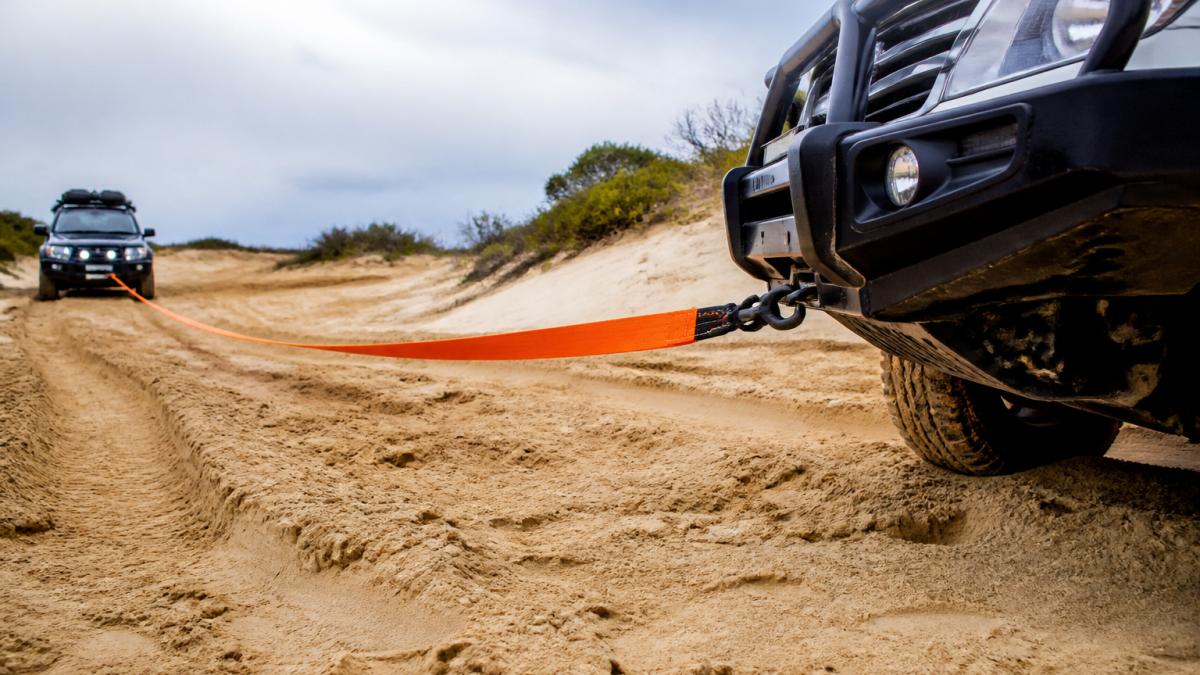
Snatch strap mechanics: dynamic pull and energy release
A snatch strap is a flat, woven nylon strap designed to deliver a sudden, powerful pull. The recovery vehicle accelerates over a short distance to build momentum, then the strap engages and transfers that kinetic energy in one hard jolt. This dynamic pull creates an explosive force that breaks suction or inertia holding the bogged vehicle in place.
The strap itself has minimal stretch. When you apply a run-up, all that acceleration converts into a sharp tug. This is why snatch straps excel at breaking a vehicle free from soft ground, sand, or mud. The sudden release of energy does what steady pulling cannot. However, this same violent energy release is also the source of the biggest safety risk. If the strap fails, a connection point snaps, or a shackle breaks, the released tension can cause serious injury or death.
Kinetic rope mechanics: stretch and controlled energy storage
A kinetic rope is thicker, usually made of braided nylon, and designed to stretch under load. Unlike a snatch strap’s rigid engagement, a kinetic rope absorbs energy gradually as it extends. This stretch acts like a shock absorber, spreading the force over time rather than delivering it all at once. The rope stores energy and releases it in a more controlled, sustained pull.
Kinetic recovery ropes work best for steady towing situations. They reduce the shock to both vehicles and their connection points. The elasticity of the rope means the recovery pull is gentler on frames, tow points, and the vehicle being recovered. This makes kinetic ropes safer for longer, more deliberate recovery operations. They’re also better suited to hard-packed terrain where a sudden jolt might cause damage rather than release.
Key Differences: Stretch, Load Capacity, and Durability
The core differences between a snatch strap vs kinetic rope come down to three factors: how much each stretches, how much weight each can handle, and how long each lasts under repeated use.
Stretch and elasticity define the recovery method. A snatch strap stretches only 5-10% of its length under load, making it nearly rigid. A kinetic rope stretches 20-30%, absorbing shock progressively. This difference determines whether you’re delivering a sharp, sudden force or a sustained, controlled pull.
Load capacity varies by diameter and construction. Both tools come in different sizes, and working load limits depend on thickness and material quality. A snatch strap rated for 10 tonnes can handle a certain vehicle weight under dynamic conditions. A kinetic rope of the same rated capacity handles the same weight under steady-pull conditions.
Durability and number of pulls differ significantly. Snatch straps, because they flex less, tend to last longer under repeated use if used correctly. Kinetic ropes, stretched frequently, show wear faster. However, the way you use each tool affects lifespan more than the tool itself.
A worn snatch strap or kinetic rope can fail suddenly during a recovery pull. Check for fraying, UV damage, tears, or thin spots before every use. Replace either tool if you see significant wear or if it has been involved in a hard pull that caused visible stress.
Snatch Strap Safety: Procedures and Failure Risks
Using a snatch strap safely requires discipline. The dynamic energy involved means mistakes carry real consequences. Before any snatch recovery, ensure both vehicles are positioned in a straight line. Never angle the recovery vehicle to the side; this concentrates force on one connection point and increases failure risk.
Connect the snatch strap to designated recovery points on both vehicles. These are reinforced anchor points designed to handle dynamic loads. Using bumpers, tow bars, or improvised attachment points is a common cause of failure. The recovery vehicle driver must build speed gradually and smoothly, not jerk the strap tight.
The biggest failure risk is the strap, shackle, or connection point breaking under load. If the strap fails mid-pull, the released energy snaps back with lethal force. Bystanders, passengers, or the recovery driver can be struck.
A second risk is overloading. If the bogged vehicle is heavier than the snatch strap’s rated capacity, the strap will fail. Always know your vehicle’s weight and match it to the strap’s working load limit. Underestimating vehicle weight is common and dangerous.
Before any snatch recovery, do a visual check of the ground around the bogged vehicle. If the terrain is extremely soft or unstable, a snatch pull might cause the recovery vehicle to sink or lose traction, making the situation worse. In these cases, steady kinetic rope recovery or winching is safer.
Kinetic Rope Size Guide: Choosing the Right Diameter and Length
Selecting the right kinetic rope means matching diameter to your vehicle’s weight and the recovery scenario. Kinetic ropes come in diameters from 10mm to 16mm, with thicker ropes handling heavier loads. A 10mm rope suits light vehicles and trailers under 2 tonnes. A 12mm rope handles most 4WD vehicles in the 2-3 tonne range.
Length matters too. A rope that’s too short limits your positioning options and reduces the stretch available for energy absorption. A rope that’s too long becomes cumbersome to store and manage. Most recovery ropes are 9-10 metres long, which suits most scenarios. Longer ropes (12-15 metres) are useful for beach recovery or situations where vehicles must be positioned far apart.
Check the working load limit printed on the rope. This is the safe continuous load the rope can handle. Never exceed this limit. A kinetic rope rated for 5 tonnes should not be used to recover a 6-tonne vehicle, even if you think the pull will be gentle. The rating exists for your safety.
Match kinetic rope diameter to your vehicle weight: 10mm for light vehicles, 12mm for most 4WDs, 14-16mm for heavy or extreme recovery. Always verify the working load limit before purchase.
Beach Recovery Gear: When Sand Changes Everything
Beach recovery gear faces unique challenges. Sand is abrasive and drains traction, making vehicles sink deeper than on other terrain. Both snatch straps and kinetic ropes work on sand, but sand changes the recovery strategy.
On soft, wet sand, a snatch strap’s dynamic pull is often more effective because the sudden force breaks suction. However, the recovery vehicle must have good traction to build the run-up needed. If the recovery vehicle also sinks, a snatch pull becomes dangerous.
Sand is also abrasive. Both snatch straps and kinetic ropes wear faster on sand due to friction against the vehicle’s body and recovery points. Inspect beach recovery gear more frequently than gear used on other terrain.
The connection hardware matters on sand. Soft shackles are preferred because they don’t dig into sand or sink as easily as metal shackles. They’re also lighter and less likely to cause injury if they fail. For beach recovery, carry soft shackles designed for your strap or rope diameter.
Soft Shackles for Recovery: Connection Hardware That Matters
A soft shackle is a loop made from high-strength rope, designed to connect a recovery strap or rope to a vehicle’s recovery point. Soft shackles have replaced metal shackles in most modern recovery kits because they’re safer and more versatile.
Soft shackles come in different breaking strengths to match your strap or rope. A 10-tonne soft shackle pairs with a 10-tonne kinetic rope or snatch strap. Using mismatched shackles and straps defeats the purpose; the weakest link in the chain will fail first.
The knot used to tie a soft shackle is critical. An improperly tied shackle can slip or unravel under load. The most common knot is the double fisherman’s knot, which is strong and reliable. If you’re not confident tying this knot, buy pre-made soft shackles rather than making your own.
Soft shackles also require inspection. Check for fraying, UV damage, or thin spots in the rope. Replace soft shackles that show significant wear. They’re inexpensive compared to the damage a failed shackle can cause.
Best Use Cases: Vehicle Type and Recovery Scenario
Choosing between a snatch strap vs kinetic rope depends on your vehicle type and the recovery scenario you’re facing.
On sand or beach terrain, kinetic ropes with longer lengths are preferred because they allow vehicles to position themselves on firmer ground. On hard-packed dirt or rocky terrain, a snatch strap works well if the bogged vehicle is relatively light.
Vehicle recovery points also matter. Vehicles with modern, reinforced recovery points (common on newer 4WDs) handle dynamic snatch pulls safely. Older vehicles with weaker attachment points are better suited to steady kinetic rope recovery.
Weather and fatigue affect the decision too. In poor visibility or when you’re tired, the slower, more controlled pull of a kinetic rope is safer than the precision needed for a snatch strap run-up.
DriveGear is your premier destination for high-quality 4WD accessories, automotive tools, and car care essentials designed to elevate your driving experience. We specialize in sourcing durable, stylish, and functional products that enhance both the performance and aesthetics of your vehicle.
Inspection, Care, and When to Retire Your Gear
Recovery gear requires regular inspection and proper care to remain safe.
Inspect your gear before every recovery attempt. Look for fraying, thin spots, tears, UV damage, or discolouration. Check soft shackles for loose knots or unravelling. Test connection points for corrosion or damage.
Store snatch straps and kinetic ropes in a cool, dry place away from direct sunlight. UV exposure degrades nylon over time. A storage bag protects gear from sun, dirt, and moisture.
Retire gear that has been involved in a hard pull or failure. Even if a strap or rope appears undamaged after a stressful recovery, internal fibres may be compromised. Continuing to use it risks sudden failure.
Record when you purchase and use your recovery gear. Most quality snatch straps and kinetic ropes last 5-7 years with proper care and moderate use. Gear used frequently or in harsh conditions may need replacement sooner.
Choosing between a snatch strap vs kinetic rope comes down to your vehicle weight, terrain, and recovery scenario. Both are essential tools for off-road recovery, and many experienced drivers carry both.
Frequently Asked Questions
What is the difference between a snatch strap and a kinetic rope?
A snatch strap uses a short run-up to create a dynamic, high-energy pull that breaks suction on bogged vehicles. A kinetic rope stretches gradually, storing energy and releasing it in a controlled manner. Snatch straps deliver sudden force; kinetic ropes apply steady, sustained pull. Snatch straps suit hard-stuck situations; kinetic ropes work better for vehicles that need gentle, progressive extraction without shock loading.
Is a kinetic rope safer than a snatch strap?
Both tools carry risk if misused. Snatch straps create sudden shock loads that can snap connection hardware or cause whip-back if they fail. Kinetic ropes reduce peak force by distributing energy over time, lowering the risk of catastrophic failure. However, kinetic ropes can overheat or fail if stretched beyond their working load limit. Safety depends on proper technique, rated capacity matching, quality hardware, and bystander positioning regardless of which tool you choose.
How do I choose the right size kinetic rope for my 4WD?
Match the rope’s working load limit to your vehicle’s weight, not its maximum breaking strength. For a 2-tonne 4WD, select a rope rated for at least 4 tonnes working load (safety factor of 2). Diameter typically ranges from 10 to 14 millimetres; thicker ropes handle heavier vehicles and rough terrain. Length should be 6 to 9 metres to allow proper stretch without running out of rope. Check the manufacturer’s specifications and cross-reference your vehicle’s mass with the rope’s rated capacity.
What recovery gear do I need to use with a kinetic rope?
You need soft shackles or rated recovery points on both vehicles, a dampening bag or recovery blanket to contain the rope if it fails, and rated snatch blocks if redirecting the pull. Avoid ratchet straps, they don’t stretch and will fail under kinetic loading. Wear eye protection and position bystanders at least 1.5 times the rope length away. Inspect all hardware before each use and retire any shackles, D-rings, or anchor points showing cracks, corrosion, or deformation.